 RED SUNSHINE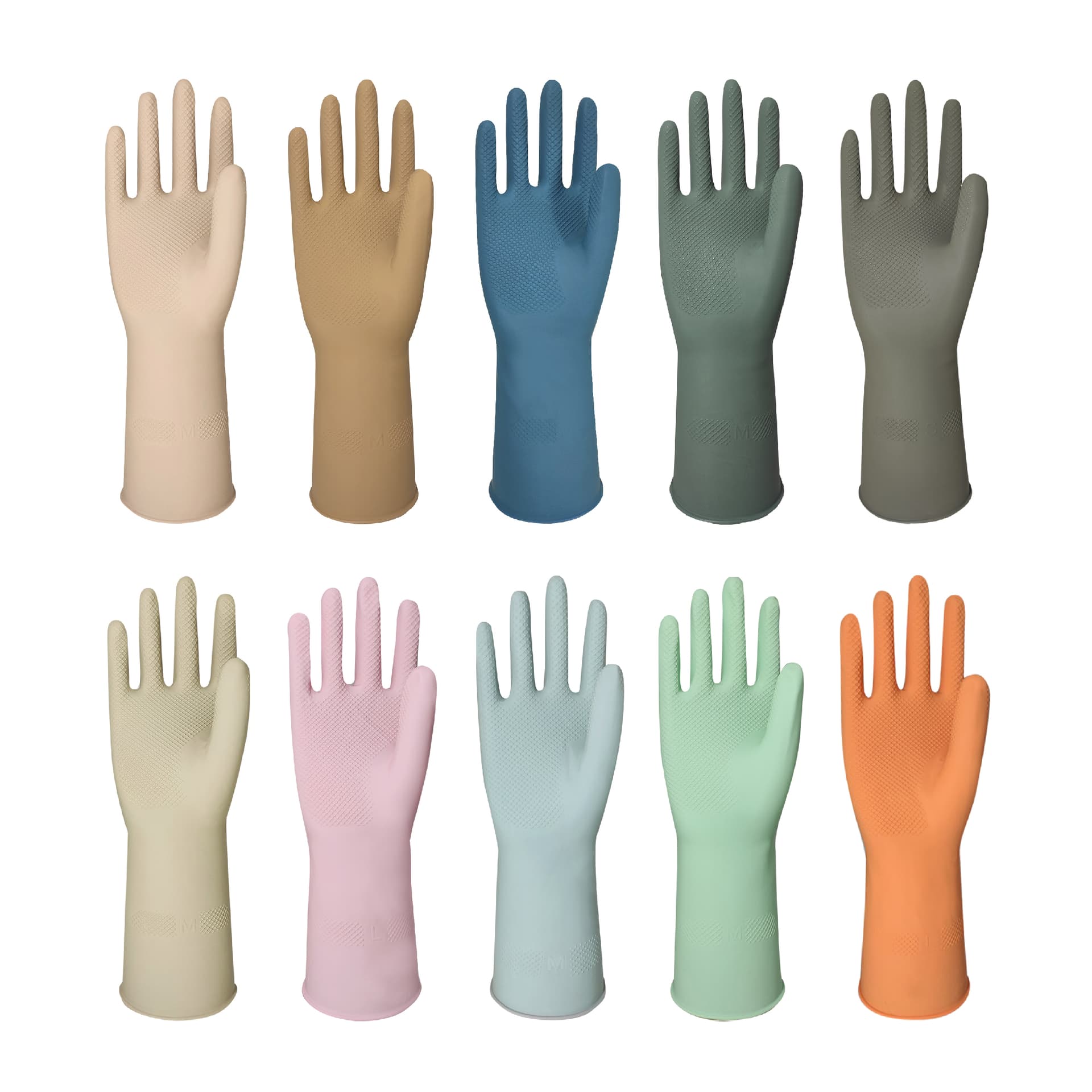
How can buyers prepare a glove sourcing brief for Russia and Central Asia?
A useful glove sourcing brief identifies the destination country, the buyer and importer, the intended task, the model and material, the required sizes and the packaging format. It also records which regulatory and labeling questions remain open. For Russia, ask your importer and customs specialist to check whether the specific product falls under the Chestny ZNAK digital marking rules before artwork and shipping plans are finalized. Uzbekistan and other Central Asian destinations must be assessed separately: do not assume that Russian requirements automatically apply there.
This article is a practical purchasing guide, not a classification decision or legal advice. The marking information below is based on guidance available on October 18, 2026. Confirm current law, transitional provisions and the product’s classification with the responsible local experts before an order is shipped.
Begin with the destination and the customer
Name the country of import, the planned sales market, the importer of record and the end customer. A distributor selling to cleaning contractors has different questions from a retailer offering a household product. If a shipment will move through more than one country, identify the customs route and each party’s role rather than describing the destination simply as “Central Asia.”
State whether you need household gloves for dishwashing and cleaning or industrial gloves for a defined task. Explain how the product will be used, the expected duration of use, the level of arm coverage requested and whether users need a particular fit or grip. Where workplace hazards are involved, the buyer should complete an appropriate risk assessment and request product-specific evidence. A material name alone does not establish protection against a given chemical, heat or mechanical hazard.
Describe the product in a way the supplier can quote
Record the model number, material, available sizes and quantities by size. Add preferred color, length, lining or interior finish, cuff design and grip pattern. Ask how dimensions and weights are measured and what tolerances apply. When comparing samples, keep each supplier’s model number with the sample and record any requested changes separately.
Natural latex, nitrile and PVC give buyers different starting options; the feel and suitability of any actual glove depend on its design and formulation. Review the latex household range, nitrile household range or PVC household range and request model-specific details. For industrial use, start with the latex industrial range or nitrile industrial range, then check the selected model against the task and evidence required.
What is Russia’s Chestny ZNAK system?
Chestny ZNAK is Russia’s product identification and traceability system. For goods within the scope of a mandatory marking program, a product-specific digital identification code and information in the system are part of the relevant compliance process. A normal printed barcode, an EAC mark or Russian-language packaging text is not a substitute for the applicable digital marking requirement. Conversely, the presence of a digital code does not on its own establish that all product safety and customs requirements have been met.
The crucial question is not simply “Are gloves marked?” but “Does this exact model, use and classification fall within a covered group, and which rules apply to this transaction?” Ask the Russian importer, customs broker and labeling adviser to confirm the answer in writing before approving the purchase order.
Which glove categories should buyers check?
Russia’s consumer protection authority says that a 2026 expansion of the light-industry marking list includes certain production and professional gloves. Its published list includes, among other classifications, EAEU tariff heading 4015 with an exception for 4015 90 000 0, and 3926 20 000 0, alongside specified Russian OKPD2 codes. The authority says the relevant EAEU tariff and OKPD2 codes and applicable legal conditions must be considered together. These are examples from the authority’s list, not a classification of any particular RSG product.
The official Chestny ZNAK community likewise advises that both relevant codes matter when assessing a product, with additional classification criteria for medical devices. A product’s description, intended use, composition and governing rules can affect the outcome. Do not assume that every household, industrial, latex, nitrile, PVC or disposable glove is covered—or exempt—solely because of the material or a website category. Medical gloves have a separate regulatory context and should not be treated as interchangeable with ordinary cleaning gloves.
Sources: Russia’s consumer protection authority, “Expansion of the light-industry goods list,” May 27, 2026: https://zpp.rospotrebnadzor.ru/news/federal/574603 . Chestny ZNAK community guidance on a vinyl household glove question, February 12, 2026: https://markirovka.ru/community/ask-expert/perchatki-vinilovye-khozyaystvennye- .
Key dates for the specified 2026 light-industry group
The Russian authority’s May 2026 notice states that mandatory marking for the newly listed group began on March 1, 2026. It describes an import transition for certain contracts concluded before February 28, 2026, through July 1, 2026, and says that release of unmarked goods in the specified group at customs is prohibited from July 1, 2026. Its notice also describes separate rules for unmarked existing stock, including an August 1 sales restriction and a December 1, 2026 deadline for marking and placing specified stock into circulation.
These dates relate to the product group and circumstances in that notice. They should not be generalized to every glove, every customs route or medical product. Requirements may change, and the notice is not a substitute for checking the current decree, customs guidance and transaction-specific transitional provisions. The importer should confirm the applicable position before shipment; if the answer is pending, mark it as an unresolved item in the sourcing brief.
Plan code responsibility before printing packaging
If the importer confirms that marking is required, agree in writing who registers product information, obtains authorized codes, provides the label artwork or secure code data, applies the codes, scans or checks them, and transmits required information to the system. Establish the required labeling level and packaging location with the responsible local party. Do not invent codes, reuse a sample code or print a generic QR code in place of an authorized identification code.
Discuss whether labels will be applied at production, by an agreed service provider or at another legally permitted stage. Confirm the actual route with the importer and customs specialist; do not assume that applying labels after arrival will meet customs requirements. Ask for an approved physical proof and a scan test using the appropriate equipment before producing a full batch. Set out who pays for labels, changes, rejected prints and rework.
Prepare the packaging and language brief
Provide the supplier with the packaging type, number of pairs per consumer pack, inner pack and carton, model and size identification, barcode requirements and carton marks. Tell the team whether artwork is supplied or needs to be prepared. Before printing, confirm the importer’s legal name and address, required warnings and other mandatory information with the buyer’s qualified local adviser. The destination market determines the requirements; Russian-language copy alone is not proof of compliance.
For Uzbekistan or another Central Asian market, identify the actual importing country and intended onward sales. Confirm the current local language, labeling, conformity and digital marking rules separately with the local importer or customs specialist. Russian and Uzbek audiences may have different communication needs, and the buyer should review final translations for meaning and legal accuracy. Use the OEM and private-label page to outline the proposed packaging project.
Build a realistic quotation and sampling request
Provide the estimated order quantity for each size and color, target delivery window, destination and preferred shipping terms. Request a written quotation showing the unit of sale and what is included. The minimum order, price, lead time and customization options must be confirmed for the exact model and configuration; a general website figure is not a final quotation.
Ask for representative samples and evaluate fit, finish, cuff length and grip against the actual task. Record observations consistently and retain the agreed reference sample. Practical handling trials do not replace the laboratory testing or conformity documentation required for a regulated claim. Request available model-specific documents and flag missing items before placing an order.
A simple buyer brief to send the supplier
Include: destination and importer; customer and intended task; household or industrial category; model and material; size and color breakdown; requested length and finish; quantity; sample requirement; packaging and language; applicable classification and marking decision; labeling responsibility; required documents; shipment terms; and the target delivery date. Separate confirmed facts from questions that still need an answer.
For a Chestny ZNAK assessment, add the importer’s proposed classification, the name of the party confirming applicability, the code provider and label location once agreed. Never place an unverified classification on an invoice or packaging merely because a similar product uses it. Ask the importer or broker to make the final determination for the actual goods.
Frequently asked questions
Is Chestny ZNAK required for every glove? The answer depends on the product and applicable rules. Russia’s authority lists certain professional gloves and requires a check of the relevant classifications and legal conditions. Household and medical products should be assessed on their own facts.
Can a supplier promise that a particular model qualifies? The supplier can provide product information, but the buyer’s importer and qualified advisers should determine the classification and applicable obligations for the actual transaction.
Does the same Russian rule automatically apply in Uzbekistan? No. Treat Uzbekistan as a separate destination and check its own current requirements.
Can an ordinary barcode replace the digital identification code? No. Where a Chestny ZNAK code is required, a normal commercial barcode is not a substitute for the required identification and reporting process.
When should the parties discuss labeling? Before final artwork and production. Early agreement helps identify space on the pack, print quality checks, responsibility, timing and cost.
Discuss your glove sourcing brief with RSG Gloves
Send your destination market, application, model, sizes, quantity and packaging questions to RSG Gloves. We can discuss the available latex, nitrile and PVC ranges, samples and possible private-label options; product details and order terms are subject to confirmation. Use our contact and inquiry form to start the conversation.
Use this guide to prepare the right questions.
This article is a sourcing checklist prepared by the Red Sunshine product and export team. Product suitability, documentation and final specifications must be confirmed for the selected model, application and destination market.
See our factory and quality processNext step
For an order-specific recommendation, send your application, preferred configuration, packaging direction and destination market to our team.
Send your requirements