 RED SUNSHINE
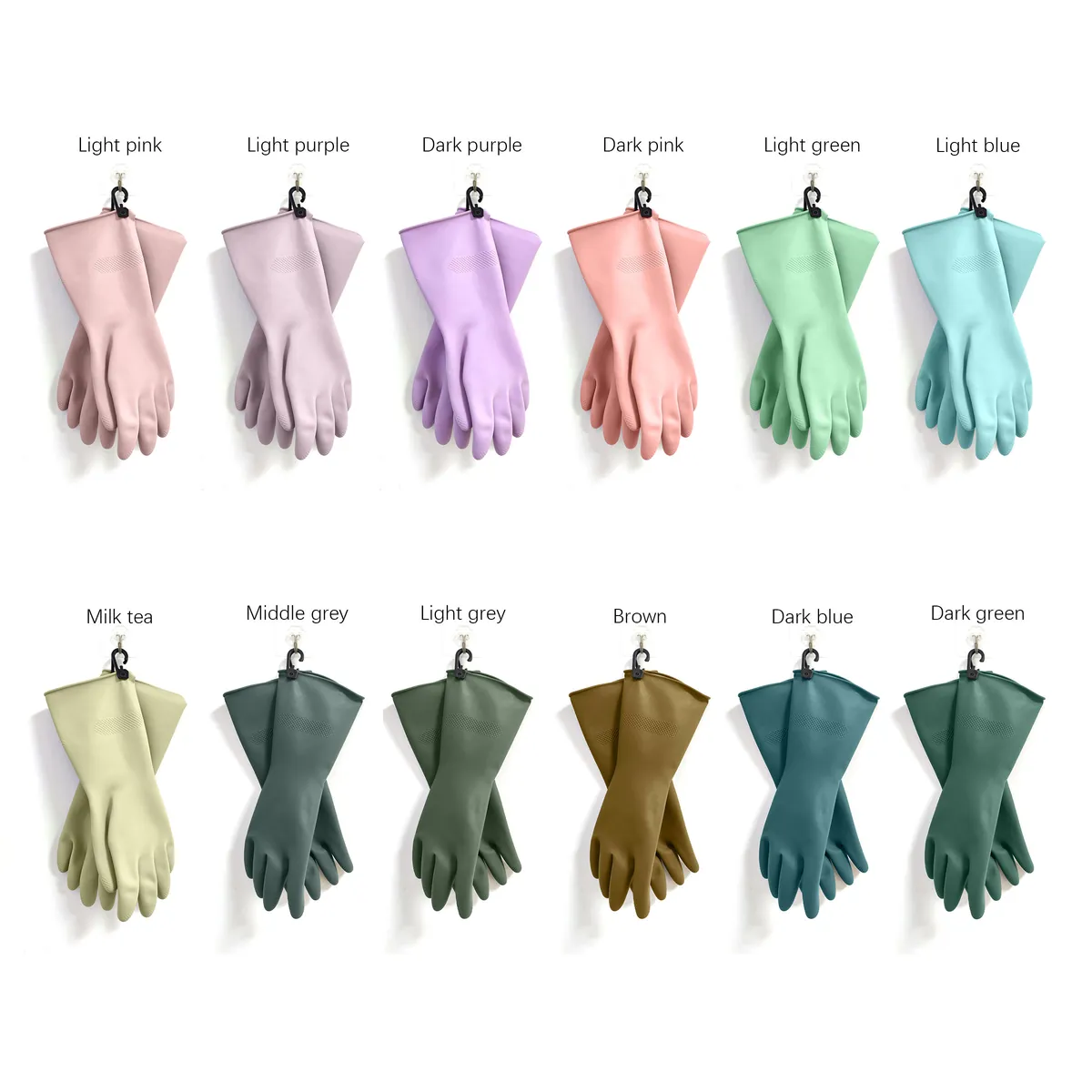
Product overview
A color-coded glove program can help cleaning teams separate tasks because it gives staff a simple visual reference for where a reusable glove is assigned. It can make task allocation, induction and stock checks easier. It does not, by itself, prove that cross-contamination has been prevented, that a glove is disinfected, or that one material is safe for every chemical. Buyers should pair color coding with task-specific glove selection, clear procedures, cleaning instructions and supervisor follow-up.
Start with the task map, not the color chart
Before choosing colors, list the work areas, the tasks performed in each area, the cleaning products used and the glove features needed. A contract-cleaning team might keep the system simple: one color for washroom duties, one for general surfaces, one for kitchen or service-area tasks, and another for maintenance. The exact mapping is a local management decision. The useful rule is consistency: employees need one visible system that matches the site’s written procedures.
Do not let a color imply a protection claim. A blue, green or purple glove is still only suitable when its material, length, fit, grip and documented limits suit the specific task. OSHA notes that glove selection should consider the anticipated hazard, the duration and nature of contact, dexterity, grip, fit and comfort. It also notes that no glove protects against every hand hazard. Review the product documentation and the cleaning product’s Safety Data Sheet before assigning gloves to work involving chemicals.
Build a practical color-coded glove program
A buyer can create a workable program with five short decisions:
1. Name each task group in plain language. “Washrooms,” “general surfaces,” “food-service cleaning” and “maintenance” are easier to remember than abstract zone codes.
2. Assign a distinct color only when it changes a work instruction or stock decision. Four well-understood colors are often easier to manage than a large palette.
3. Match the color to an approved glove specification. Record the material, model, size range, cuff length, lining or finish, packing format and approved sample for each task group.
4. Put the same color names on storage bins, replenishment lists, training cards and purchase orders. A visual system fails when the carton, shelf label and supervisor’s instructions use different terms.
5. Define what happens after a task: where the glove is rinsed or cleaned if reusable, where it dries, who inspects it, and when it is removed from service.
Use color to support training and stock control
Color coding has value because it reduces the time needed to identify the intended allocation. It can help a supervisor see whether a storage point has the right glove available, and it helps new staff ask a clearer question: “Is this the washroom glove or the general-surface glove?” Training still needs to cover correct fitting, use, removal, care and the limitations of the selected PPE.
A short briefing should show the task map, the storage location for each color, the approved products for that color, and the escalation step when a worker needs another size or specification. Keep the instruction near the stock point and in the language used by the team. When the site changes a chemical, procedure or work area, review the program rather than assuming the old color mapping remains appropriate.
Choose the glove range separately from the color plan
For an OEM or private-label order, color is only one part of the brief. Confirm the intended material and construction first. Reusable [latex household gloves](https://www.rsgloves.com/products/latex-household-gloves) can be discussed for designated cleaning programs where natural rubber latex is appropriate for the workplace. Buyers who want to review alternatives can compare [nitrile household gloves](https://www.rsgloves.com/products/nitrile-household-gloves) and [PVC household gloves](https://www.rsgloves.com/products/pvc-household-gloves) against their task requirements, sample evaluation and destination-market rules.
Do not rely on material names alone for chemical suitability. The U.S. Centers for Disease Control and Prevention advises facilities to follow product labels and the Safety Data Sheet, including the recommended protective equipment for the cleaning or disinfecting product. For chemical contact, the workplace should confirm the actual formulation, concentration, contact type and instructions with the responsible safety professional or supplier documentation.
A buyer’s specification table
| Program item | What to define before ordering | Why it matters |
| --- | --- | --- |
| Task color | Color name and assigned task group | Keeps the visual system consistent |
| Glove model | Material, texture, length and approved sample | Avoids substituting a color for a specification |
| Size mix | Sizes and quantities for each color | Supports fit and replenishment |
| Packaging | Pairs per inner pack, carton marks and color identification | Makes receiving and shelf control easier |
| User instruction | Storage, cleaning, inspection and replacement steps | Connects the product to the site procedure |
| Change control | Who approves a color, model or label change | Prevents silent substitutions |
For private-label ranges, ask the supplier to quote colors as part of an identified model and packaging proposal. Confirm color references from an approved physical or digital standard, since on-screen rendering can vary. If several colors use the same base specification, state that clearly in the purchase order; if a color needs a different size range, cuff or packaging, list it as a separate line.
Keep the limits visible
A color-coded glove program is an administrative aid, not a guarantee of hygiene performance. A glove may become damaged, contaminated or unsuitable regardless of its color. Workers should inspect reusable gloves for changes such as tears, thinning, tackiness or visible soil according to their workplace procedure and the product guidance. Remove damaged gloves from service. Hand hygiene and cleaning of reusable equipment still matter after glove removal.
For tasks involving disinfectants or other chemicals, follow current local regulations, the chemical label and the Safety Data Sheet. CDC facility guidance says workers should receive training before cleaning and disinfecting tasks, including what PPE is needed and how to put it on, use it and take it off. That guidance does not replace site-specific risk assessment or destination-market requirements.
Questions buyers should ask before rollout
### Can the same glove model be supplied in several colors?
Often that is a commercial and production question rather than a safety conclusion. Provide the preferred colors, model, size mix, packaging and target order quantity for review. Confirm availability against an approved sample.
### Does color coding prevent cross-contamination?
No. It can help teams follow task separation procedures, but it cannot guarantee an outcome. Procedures, cleaning methods, user training, glove condition and task-specific PPE selection remain necessary.
### Should every task have a different color?
Not necessarily. Start with the few task groups that staff need to recognize quickly. Add a color only when it supports a real instruction, stock decision or audit check.
### What should appear on the outer carton?
Use a clear model reference, color description, size, quantity, buyer’s label information and any agreed handling information. Confirm destination-market labeling requirements separately.
Make the system easy to audit
During a monthly review, compare the written task map with what is on shelves and in use. Ask staff to explain the color allocation, check whether the selected glove still fits the task, and record shortages, damaged stock or recurring confusion. This creates a practical feedback loop for the next OEM order.
RSG Gloves can discuss reusable glove models, size ranges, colors, packaging and private-label details for cleaning programs. Send the task map, target market, expected quantities and preferred packaging through our [inquiry page](https://www.rsgloves.com/contact) so the product brief can be reviewed against the intended application.
Sources
- [OSHA: PPE assessment and hand-protection training](https://www.osha.gov/training/library/personal-protective-equipment/assessment)
- [OSHA: hand-protection selection guidance](https://www.osha.gov/laws-regs/regulations/standardnumber/1910/1910SubpartIAppB)
- [CDC: cleaning and disinfecting a facility](https://www.cdc.gov/hygiene/about/when-and-how-to-clean-and-disinfect-a-facility.html)
Use this guide to prepare the right questions.
This article is a sourcing checklist prepared by the Red Sunshine product and export team. Product suitability, documentation and final specifications must be confirmed for the selected model, application and destination market.
See our factory and quality processNext step
For an order-specific recommendation, send your application, preferred configuration, packaging direction and destination market to our team.
Send your requirements